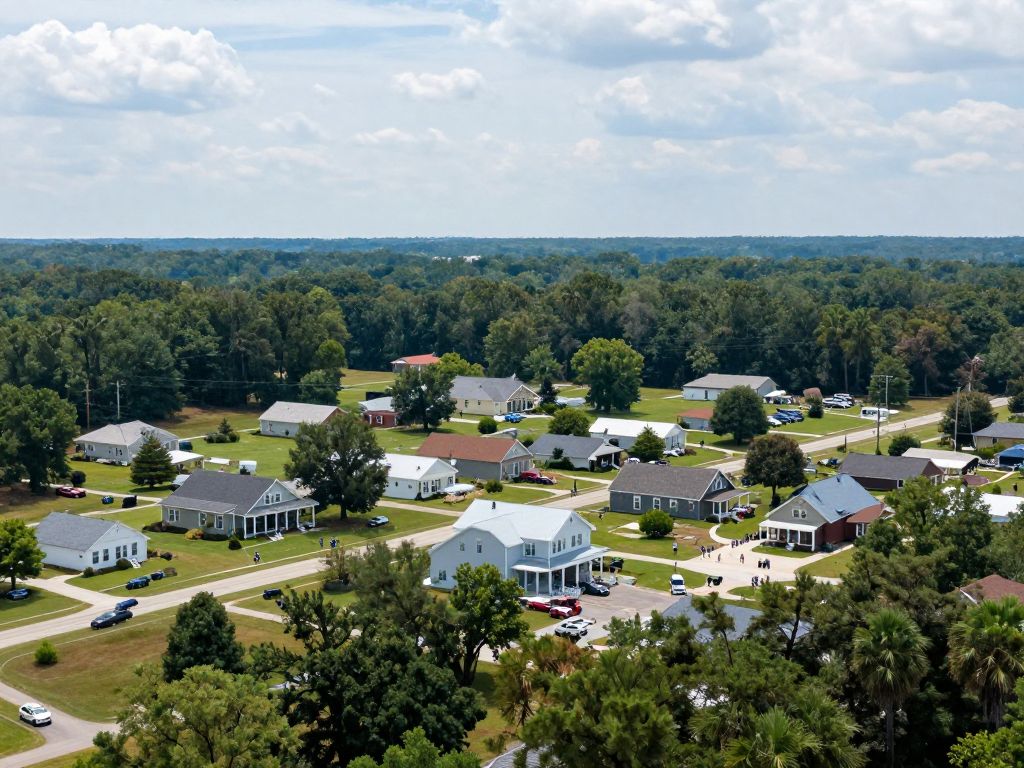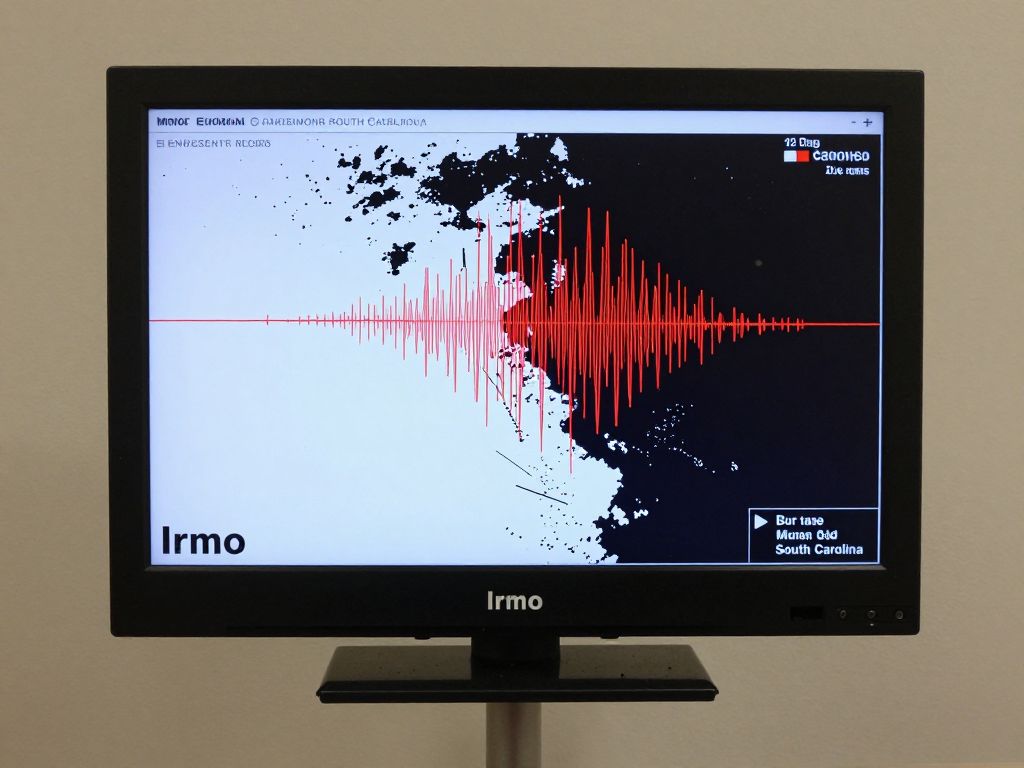

Irmo, South Carolina, February 17, 2026
A 1.9 magnitude earthquake was reported near Irmo, South Carolina, on February 15, 2026. The tremor, confirmed by the USGS and local emergency management, is classified as a micro-earthquake and is unlikely to have caused any significant damage. Generally felt only by those near the epicenter, such low-magnitude quakes are extremely common and often go unnoticed by most residents.
COLUMBIA, S.C.
Minor 1.9 Magnitude Earthquake Recorded Near Irmo, South Carolina
A 1.9 magnitude earthquake occurred near Irmo, South Carolina, in the Midlands region on Sunday, February 15, 2026. The seismic event was confirmed by both the United States Geological Survey (USGS) and the South Carolina Emergency Management Division. This minor tremor is highly unlikely to have caused any significant damage or widespread disruption, a common characteristic for earthquakes of such low magnitude.
Details of the Seismic Event
The earthquake’s epicenter was situated in the vicinity of Irmo, a town located within the Midlands area of South Carolina. The South Carolina Emergency Management Division was among the first to report the 1.9 magnitude tremor, noting its occurrence in the region. Such low-magnitude events are typically felt only by a very small number of individuals who are directly over or very close to the epicenter and are often described as a slight jolt or brief rumble. For most residents, events of this scale pass entirely unnoticed. The confirmation from the USGS further corroborated the occurrence of this recent seismic activity, adding to the data collected on the geological movements within the state. No reports of damage or injuries have emerged following the tremor, which is consistent with the minimal impact expected from an earthquake of this intensity.
Understanding Earthquake Magnitudes and Their Impact
The magnitude of an earthquake is measured using a logarithmic scale, often referred to as the Richter scale, which quantifies the energy released at the earthquake’s source. Each whole number increase on this scale signifies a tenfold increase in the amplitude of seismic waves recorded by a seismograph and approximately 32 times more energy released. A 1.9 magnitude earthquake falls into the category of a “micro-earthquake.” These are extremely common globally, with millions occurring each year, and the vast majority are not felt by humans.
To put this into perspective, earthquakes typically cause:
- Less than 2.0 magnitude: Not generally felt by people, only recorded by seismographs.
- 2.0 to 2.9 magnitude: Often felt, but seldom cause damage.
- 3.0 to 3.9 magnitude: Frequently felt, minor localized damage possible.
- 4.0 to 4.9 magnitude: Noticeable shaking, significant damage unlikely.
- 5.0 to 5.9 magnitude: Can cause considerable damage in poorly constructed buildings over small regions.
- 6.0 to 6.9 magnitude: Potentially destructive in populated areas.
- 7.0 to 7.9 magnitude: Major earthquake, capable of widespread, severe damage.
- 8.0 and higher: Great earthquake, causing catastrophic damage over large areas.
Given its 1.9 magnitude, the recent Irmo earthquake aligns with events that are primarily detectable by scientific instruments rather than through human sensation or visible effects.
Seismic Monitoring and Regional Activity
The continuous monitoring of seismic activity is crucial for understanding geological processes and assessing potential risks. Agencies like the USGS employ a network of seismographs positioned across the country and globally to detect and record even the slightest ground movements. This data helps scientists to map active fault lines, understand regional seismicity patterns, and improve earthquake hazard assessments. The ability to detect minor tremors like the one near Irmo provides valuable insight into the underlying geological structures and stress accumulations in the Earth’s crust.
South Carolina has a history of experiencing seismic events. While the state is not as seismically active as regions along plate boundaries, it does undergo periodic tremors, particularly in the central and coastal plains. The most notable historical event was the devastating 1886 Charleston earthquake, estimated to be between 6.9 and 7.3 magnitude, which caused extensive damage and fatalities. Although such a large-scale event is rare, the occurrence of smaller earthquakes is a regular reminder of the ongoing geological processes beneath the surface. These minor quakes serve as a natural part of the state’s geological landscape, typically posing no threat to the public.
Frequently Asked Questions
When did the earthquake near Irmo occur?
The earthquake near Irmo occurred on Sunday, February 15, 2026.
What was the magnitude of the earthquake?
The earthquake had a magnitude of 1.9.
Where was the earthquake located?
The earthquake was located near Irmo, South Carolina, in the Midlands region.
Which agencies confirmed the earthquake?
The earthquake was confirmed by both the United States Geological Survey (USGS) and the South Carolina Emergency Management Division.
Is a 1.9 magnitude earthquake significant?
A 1.9 magnitude earthquake is considered very minor and is typically not felt by most people. It is unlikely to cause any significant damage or widespread disruption.
Key Features of the Irmo Earthquake
| Feature | Detail |
|---|---|
| Date | Sunday, February 15, 2026 |
| Magnitude | 1.9 |
| Location | Near Irmo, South Carolina (Midlands region) |
| Confirming Agencies | United States Geological Survey (USGS), South Carolina Emergency Management Division |
| Expected Impact | Minimal to none; unlikely to be widely felt or cause damage |
Deeper Dive: News & Info About This Topic
HERE Resources
Minor Earthquake Detected Near Irmo, South Carolina
Minor Earthquake Recorded Near Irmo, South Carolina
Irmo Feels the Earth Move: Quake Shakes Local Residents
Recent Earthquakes Shake Midlands Region Near Irmo
Midlands Region of South Carolina Experiences Minor Earthquakes
Recent Earthquakes Rattle Lake Murray Area
Irmo, South Carolina Experiences Latest Seismic Activity
Irmo Officials Chart Course for Safer Roads
Irmo Boosts Park Access for All Residents
Lexington County Feels Tremor: Community Resilience in Focus

Author: STAFF HERE IRMO
The IRMO STAFF WRITER represents the experienced team at HEREIrmo.com, your go-to source for actionable local news and information in Irmo, Lexington and Richland Counties, and beyond. Specializing in "news you can use," we cover essential topics like product reviews for personal and business needs, local business directories, politics, real estate trends, neighborhood insights, and state news affecting the area—with deep expertise drawn from years of dedicated reporting and strong community input, including local press releases and business updates. We deliver top reporting on high-value events such as the Irmo Okra Strut Festival, Harbison Community Events, and local sports tournaments at the Palmetto Health Credit Union Foundation Stadium. Our coverage extends to key organizations like the Irmo Chapin Recreation Commission and the Lexington Chamber and Visitors Center, plus leading businesses in retail and healthcare that power the local economy such as Village at Sandhill and Lexington Medical Center. As part of the broader HERE network, including HEREAiken.com, HEREBeaufort.com, HEREChapin.com, HERECharleston.com, HEREClinton.com, HEREColumbia.com, HEREGeorgetown.com, HEREGreenwood.com, HEREGreenville.com, HEREHiltonHead.com, HEREIrmo.com, HEREMyrtleBeach.com, HERENewberry.com, HERERockHill.com, and HERESpartanburg.com, we provide comprehensive, credible insights into South Carolina's dynamic landscape.