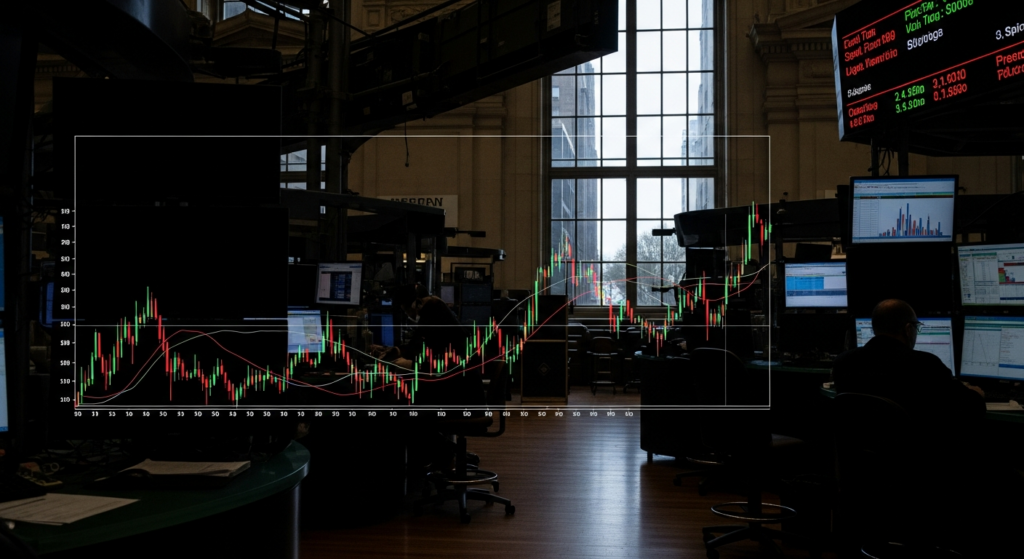
Global financial markets reacted sharply on Monday, July 20, as Brent crude oil prices surged past $90 a barrel for the first time since early June, driven by escalating tensions and disruptions in the Strait of Hormuz. Concurrently, Treasury bond futures slipped, pushing the 30-year Treasury yield above 5.0 percent, a move that signals potential shifts in borrowing costs.
The spike in oil prices is directly linked to renewed hostilities between the U.S. and Iran, which have complicated the global inflation outlook. A market briefing indicated that only a handful of ships transited the critical Strait of Hormuz on Sunday, a key chokepoint for global oil shipments, with one vessel reportedly on fire. This disruption has fueled concerns about supply stability, pushing oil prices, which had already climbed above $80, further upward.
The rise in Treasury yields reflects investor concerns about inflation and the potential for tighter monetary policy. Rate futures now imply approximately a 65 percent chance that the Federal Reserve will implement another rate hike in September. Such a move would further increase borrowing costs for consumers and businesses, impacting everything from mortgages to corporate loans.
While these developments originate on the international stage, their effects are expected to ripple through local economies, including Irmo. Higher oil prices translate to increased costs at the pump for commuters and higher operational expenses for businesses reliant on transportation and energy. Similarly, rising bond yields can lead to higher interest rates on various forms of credit, potentially affecting local investment and consumer spending in Irmo.
Why it matters in Irmo
The global economic shifts driven by rising oil prices and bond yields carry direct implications for Irmo. Local businesses along the Harbison Boulevard retail corridor, for instance, face increased operational costs due to higher fuel prices for deliveries and transportation, which can ultimately be passed on to consumers. For residents, the immediate impact will be felt at the gas pump and potentially through higher utility bills, as energy costs rise. Furthermore, the prospect of a Federal Reserve rate hike in September, influenced by these market movements, could translate to higher interest rates on mortgages, car loans, and business lines of credit, affecting both individual purchasing power and the growth prospects for employers like Lexington Medical Center and Lexington-Richland School District Five, which rely on stable financial conditions for planning and expansion.
Section: More Irmo SC business news
Irmo business profiles
Filed under: Irmo SC Business News